


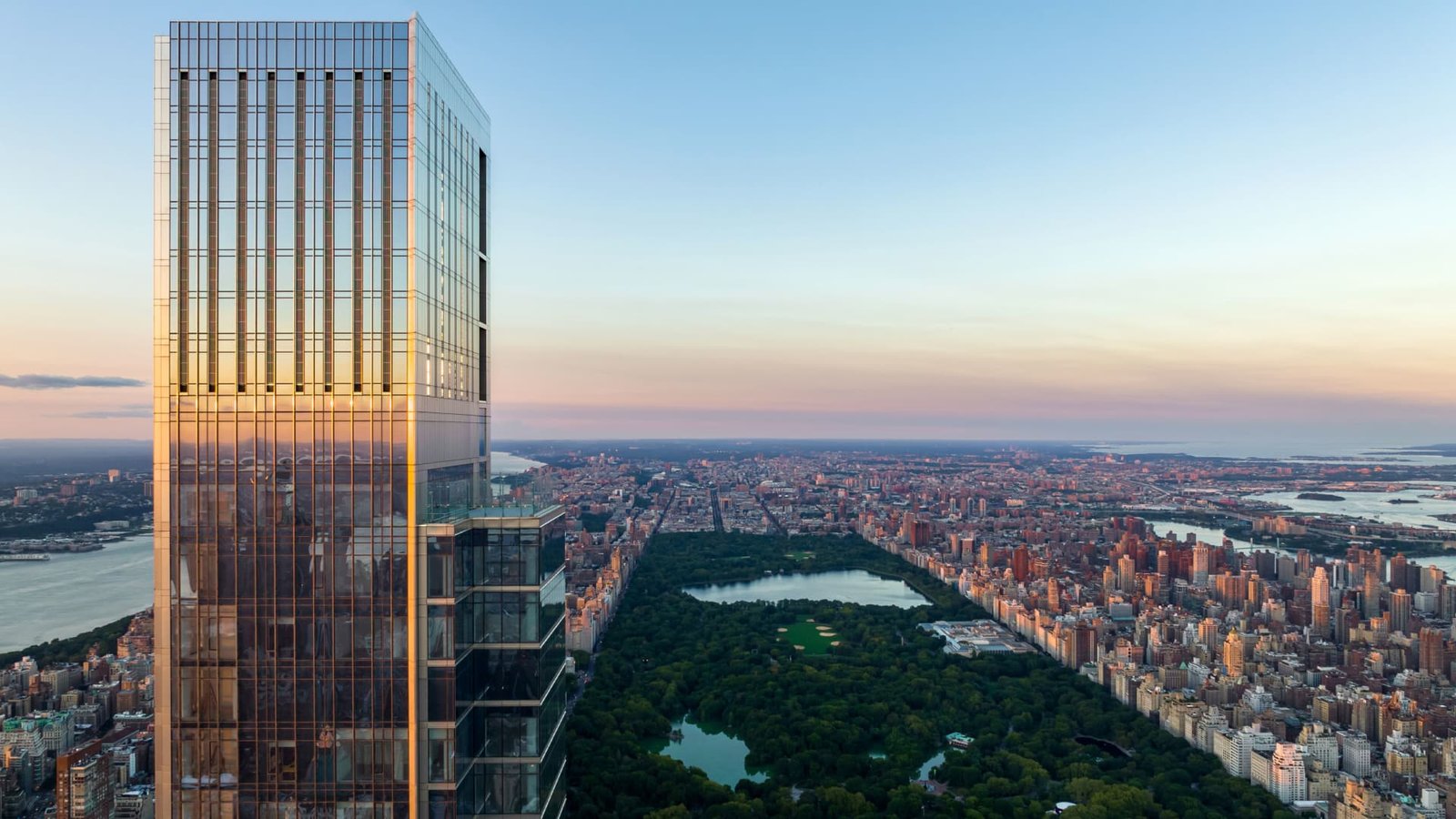
A view of Central Park Tower at 217 West 57th Street in New York City.
Source: Cody Boone, SERHANT Studios
A version of this article was first published by Robert Frank in CNBC’s Inside Wealth newsletter, a weekly guide for high-net-worth investors and consumers. Sign up to receive future editions directly to your inbox.
A new report says surging credit markets and hopes of lower interest rates are helping to fuel a recovery in the ultra-luxury real estate market, with sales of $100 million homes expected to double this year.
According to data from Miller Samuel and Douglas Elliman, six homes have sold in the U.S. for more than $100 million as of July 15. If this sales pace continues, it will more than double last year’s total and likely break the record of nine homes sold for more than $100 million in 2021.
Admittedly, the nine-figure club is a small group. But sales of homes priced at $50 million, $20 million and even $10 million all point to a strong recovery in the ultra-luxury real estate market after a dip in 2023. This resurgence stands in contrast to housing markets across the nation, which are still feeling the pressures of high mortgage rates and limited supply.
“This is a significant increase in the pace of sales that is simply not being seen across the housing market as a whole,” said Jonathan Miller, CEO of appraisal and inspection firm Miller Samuel.
In Manhattan, two blockbuster transactions occurred within the space of about a month: a penthouse at Central Park Tower, the world’s tallest residential building, sold to an unnamed buyer for $115 million, and a penthouse at the Aman New York was reportedly sold for $135 million to Russian-born billionaire Vladislav Doronin, who founded the development company that built the building and effectively bought it from his own company.
Tarpon Island, the only private island in Palm Beach, Florida, sold in May for $150 million, and Oakley founder James Jannard just sold his Malibu mansion for $210 million, making it the most expensive home ever sold in California.
Tarpon Isle, a private island off Palm Beach, Florida, is for sale for $218 million.
CNBC
Even San Francisco is getting in on the ultra-luxury housing boom: Laurene Powell Jobs, the billionaire widow of Steve Jobs, has purchased the most expensive home ever sold in the city, a 17,000-square-foot mansion in Pacific Heights that’s sandwiched between neighbors Larry Ellison on one side and Apple design guru Jony Ive on the other.
There are also signs of strength further down the luxury spectrum: More than 4,000 homes priced above $5 million were sold through June, up 13% from the same period last year, according to Redfin.
“The start of the year has been much better and stronger than anyone expected,” said Mike Golden, co-founder of Chicago-based @properties and Christie’s International Real Estate.
Demand is strong in luxury markets nationwide, according to Christie’s Mid-term Luxury Market Outlook for 2024. In Naples, Florida, sales of homes over $10 million increased 14% in the first quarter, according to the report. In Montana, sales of homes over $4 million jumped 50% through early May, according to PureWest Christie’s International Real Estate.
The artificial intelligence boom is helping to boost sales again in the San Francisco Bay Area.
“What has surprised me most so far in 2024 is how many qualified buyers there are who can afford and are willing to pay premium prices for ultra-luxury properties, which speaks to the incredible liquidity at the top end of the market,” said Bay Area real estate broker Natalie de Saint Andrew.
The differing paths of ultra-luxury and the overall housing market highlight the very different forces driving the luxury economy from the rest of the country. The national real estate market rises and falls along with mortgage rates, and home affordability is at an all-time low, with many Americans trapped in their homes by low-interest mortgages. The ultra-wealthy can buy homes with cash, especially when rates are high. In Manhattan, two-thirds of transactions this spring were made in cash, according to Miller Samuel, and the share was even higher in the luxury sector.
Plus, the confidence (and cash) of wealthy homebuyers is being driven in large part by the stock market, which has been breaking records this summer. With trillions of dollars in equity wealth being created, the ultra-rich are now looking to buy.
“The ultra-luxury housing market is largely separate from the typical housing market,” Miller said. “It’s more of a global market than a regional one, and it’s kind of a barometer of the health of the global financial markets.”
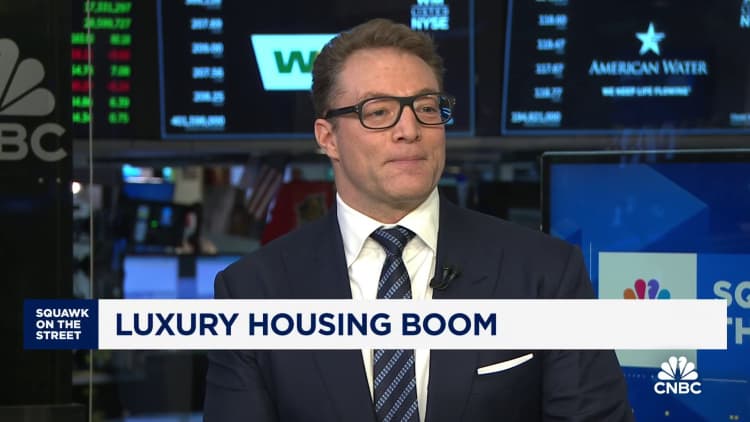
A surge in inheritances due to the $80 trillion wealth transfer is also driving sales. Daniel de la Vega, president of One Sotheby’s International Realty, said he has seen a surge in South Florida condo purchases by millennial and Gen Z buyers using family trusts.
“They want new developments, and some of them come to buy without seeing the property,” he said. “They especially like branded homes.”
Another trend driving ultra-luxury home sales is the demand for larger homes than ever before, De La Vega said. Since the pandemic, wealthy buyers are looking to outfit their homes with a full range of lifestyle amenities, from gyms and spas to offices, entertainment spaces and spaces to display art and car collections, he said.
The price per square foot for a luxury condo in South Florida has increased 33 percent this year to $3,451, while the price per square foot for a single-family home has increased 11 percent to $2,485.
“Previously, as the land size increased, the price per square foot went down,” de la Vega said. “Now it’s the opposite. I’ve never seen numbers like this. They’re astronomical.”
The luxury real estate market typically takes a lull before a presidential election as buyers wait for more certainty about the outcome, and for now, strong financial markets are outweighing concerns about the election. But that’s far from the case in the second half of the year.
“The election doesn’t appear to be weighing heavily on the ultra-luxury housing sector, at least judging by what we’ve seen this year,” Miller said.
Sign up to receive future Inside Wealth issues by email.