


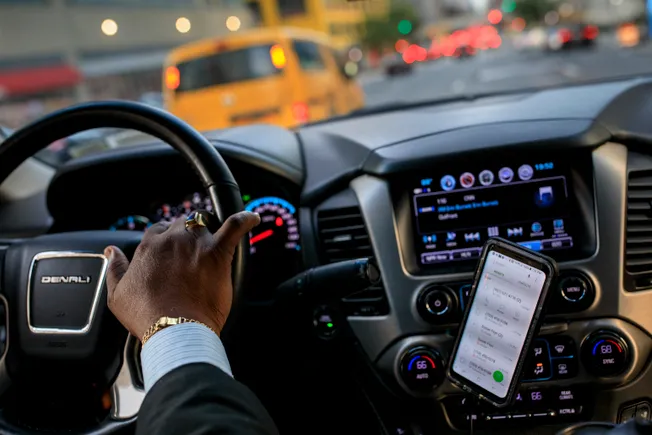
There was a time when ride-sharing company Uber’s barely noticeable app-based payment system was an anomaly.
Uber’s payment process is one of the earliest forms of embedded payments, a concept that streamlines the checkout process so that consumers barely notice they’re pressing the “pay” button. Companies capture consumers’ payment information when they sign up for their service and never ask for it again. Instead, the service provider automatically charges them for each transaction.
Embedded payments are now part of a broader movement towards embedded finance by service providers. This allows merchants and retailers to not only offer payment services to consumers, but also sell other services such as insurance, bank accounts and loans.
As the use of embedded payments increases, this primer aims to provide industry professionals and other stakeholders with a better understanding of the role this evolving technology will play in the market.
“Embedded” payments mean the payment process is so seamlessly built into an app or website that it’s largely invisible to the consumer, Vinay Prabhakar, chief marketing officer at Jersey City, New Jersey-based payments company Volante Technologies, said of embedded payments.
“We don’t actually make payment as part of the experience. Payment is a by-product of the experience and specific actions we take,” he said.
While embedded payments have been around for years, payments industry insiders like Prabhakar say the process will become more common in the coming years as retailers and other merchants look to streamline the checkout process and get paid more quickly.
Definitions vary depending on who you ask, but generally speaking, embedded payments are “payments integrated into non-financial services.” Terry O’Neill said. Head of Connected Commerce and Strategic Growth for City Retail Services.
Some of the companies offering embedded payment services are banks, while others serve banks and merchants. These include Volante, digital payments giant Stripe, merchant card company Marqeta and Dutch processor Adyen.
Adyen, which has regional headquarters in San Francisco and has a U.S. banking license, allows merchants who want to embed payment services on their websites or apps to use Adyen’s network to receive funds more quickly, said Blake Breathitt, senior vice president of global platform and financial services at Adyen.
“We provide the payment processing infrastructure that enables our clients to run their payments businesses,” he said.
Banks are still involved in the process (more on that below), but when financial services like payments are “embedded,” you don’t have to leave the store, the company’s app, or the merchant’s website to make a payment.
Marketa’s chief revenue officer, Todd Pollack, said in an email that embedding the checkout process into apps, websites and services saves consumers time.
This process allows for “It’s easier for customers to pay directly within the brand’s experience rather than being redirected to an external payment site,” he said.
Embedded payments also benefit retailers because they help them build long-term relationships with customers, Pollack said.
The explosive growth of embedded payments
The number of retailers offering embedded payments is expected to continue to grow.
Juniper Research predicted in an April report that the global market for embedded finance as a whole will double from $92 billion to $228 billion between 2024 and 2028.
“This growth is driven by market maturity and increasing consumer confidence, supported by wider acceptance and application,” the Juniper report said.
Uber’s example is “why we have technology companies and platform companies today that can create frictionless[payments]experiences,” said Sunil Sachdev, head of embedded finance at Fiserv.
Why is Embedded Finance Important?
The trend in payments is moving towards speed and convenience. Devices like smartphones and tablets are becoming more advanced every day, offering more built-in payment and access to financial services.
“We’re living in an era where companies are saying, ‘I want to provide the best possible customer experience, the best consumer experience, for the customers that I serve,’ so they’re looking to bring the payments experience into what they do,” said Mike Jorgensen, head of emerging solutions and strategy at U.S. Bank.
Jeff Thissen, global head of fintech at consulting firm Bain, said embedded payments would make it easier for retailers to allow customers to pay directly.
According to an April report from Juniper, technological advances are making such experiences possible.
Breakthroughs in increasingly advanced artificial intelligence Used in the payments industrysaid further streamlining the process could help accelerate the adoption of embedded payments. Agustin Rubini, banking and investment services analyst at research and consulting firm Gartner.
“AI contributes to convenience by providing the brainpower needed to approve funds,” he said.
Roubini said the AI program can instantly perform the necessary checks and approve the transfer.
Banks also benefit
Just because payments are made directly through a company’s app or website doesn’t mean banks and other financial institutions are omitted from the process.
“We’ve seen a lot of interest from banks, insurance companies and asset managers,” Thissen said.
He said retailers want embedded payment processing, which gives banks that offer embedded financial services the opportunity to work with more businesses.
Leah Kao, head of global embedded finance at JPMorgan Chase, said the bank is actively exploring additional ways it can adopt embedded payments. JPMorgan already has practical use cases in the healthcare and automotive industries, but is exploring additional opportunities in the insurance and oil and gas industries, Kao said. I said this year.
As another banking service, U.S. Bank offers software that retailers can use to incorporate payments into the shopping experience.
“U.S. Bank is focused on transitioning to a profit center and helping move funds in a way that supports the customer experience,” Jorgensen said.
Industry observers like Jorgensen and Thissen expect embedded payments to boom as consumers love convenience and businesses love speed.
“There isn’t a single bank that isn’t actively working on this or starting to offer some kind of embedded financing proposition,” Thissen said.