


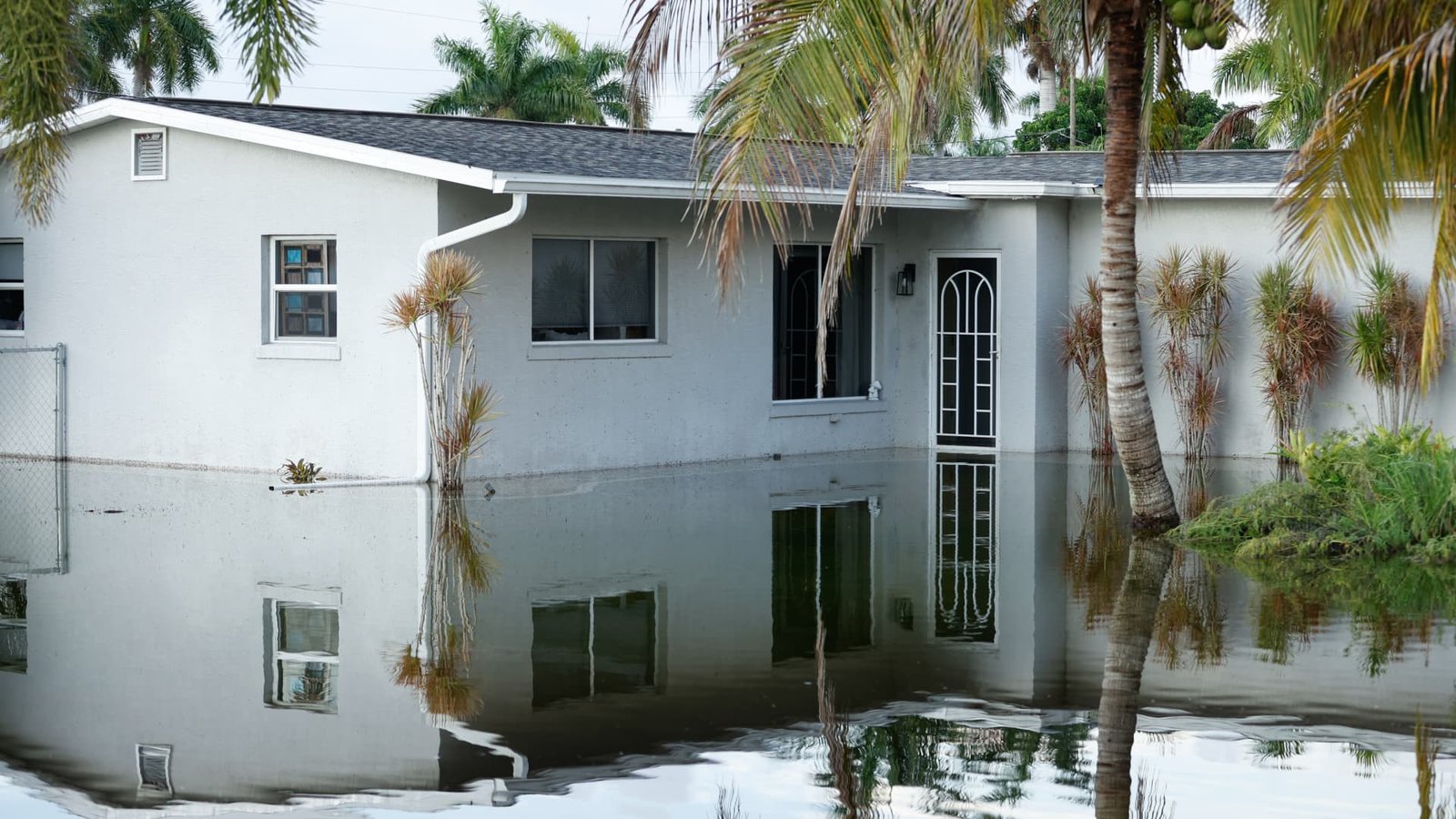
Flooded roads after 24 hours of heavy rainfall in Fort Myers, Florida, USA, on June 13, 2024.
Anadolu | Anadolu | Getty Images
Consumers preparing to renew their homeowners insurance may be surprised by an unexpected price tag.
Between May 2022 and May 2023, home insurance premiums increased by an average of 21% at renewal, according to Policygenius.
Experts say the spike is due in part to an increase in devastating weather events, and the rate of increase shows no signs of slowing. Insurers are facing rising costs, which they are passing on to consumers in the form of higher premiums.
But insurers don’t share data on individual homeowners’ premiums or risks, making it difficult to calculate how much climate risk is factored into premiums.
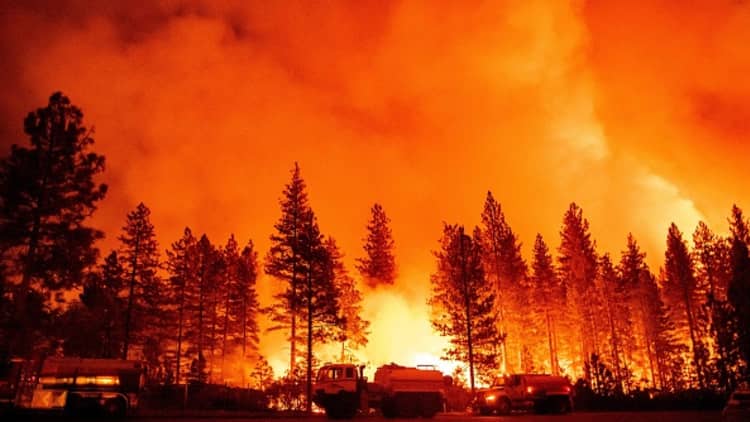
“The level of risk and the types of hazards that properties are exposed to are changing dramatically,” said Carlos Martin, director of the Remodeling Futures program at Harvard University’s Joint Center for Housing Studies.
“And right now there’s a lot of confusion, not just among homeowners but also among insurance companies, about how this should be price actuarially,” he said.
Data available from insurance companies is “minimal”
Home insurance premiums increased substantially last year, but this is not a new phenomenon: Between 2012 and 2021, average premiums rose from $1,034 to $1,411, according to the Insurance Information Institute.
Some annual increases over that period were larger than others, said Kenneth Klein, a professor at California Western School of Law, who added that climate change could result in economic “fat tail losses” because storm damage is not spread evenly across all insured assets or over time.
“For many insurers along the Gulf Coast, if they can weather Katrina financially, next year will be one of their most profitable years,” he said. “Premiums adjusted for Katrina, but nothing like Katrina happened. That’s the challenge with climate change insurance.”
More information on personal finance:
Defining a buyer’s market is ‘a bit tricky,’ experts say: 4 signs to watch for
Building the middle class could become a “definitive goal” under President Harris
Student loan payments paused for millions: what you need to know
Martin said it’s hard to know how insurance rates will continue to rise in response to severe weather.
“The data is very scarce,” Martin said. “Insurance companies don’t disclose to the public how much they’re charging individual homeowners, and there’s not much reporting.”
Scott Shapiro, U.S. insurance leader at KPMG, said the insurance industry collects data on weather-related losses to help price premiums, but the detailed data isn’t publicly available.
“This data is critical for premium pricing and filing,” Shapiro said. “The main challenges are increased exposure to weather-related risks and uncertainty about whether past losses can accurately predict future losses.”
Insurers are retreating from high-risk areas
Home insurance rates may be rising, but homeowners who live in areas at risk of flooding or fire may have few options.
For example, State Farm stopped accepting new applications for California insurance in May 2023. Allstate announced in November 2022 that it would suspend new applications for home, condo and commercial insurance in the state.
Insurance companies “are not in the business of just giving away money because they have to, or doing the right thing because it feels right,” Klein said. “Insurance companies are in the business of trying to make a profit within a set of laws and regulations.”
Experts say that because insurance is required for most mortgages, limited insurance options and high costs can be a major barrier to homeownership.

The Florida Legislature created Citizens’ Property Insurance in 2002 as an option for Floridians who could not find home insurance on the private market. California’s FAIR Plan, while not a state or public agency, was created as an act of state insurance law to provide fire insurance that was not available on the traditional market.
State-run programs may serve as a last resort, but they don’t necessarily offer the same quality of coverage that private insurers provide.
“They’re sometimes not built on the same actuarial principles that private insurers are built on,” Klein said, “and as a result, they’re creating problems. They often don’t get adequate coverage.”
Martin said it’s existing homeowners who are feeling the pain of rising premiums the most.
“They know how much they paid when they first bought their home, and they know how much they’re paying now, so they’re realizing that,” he said. “And it’s increasing.”