


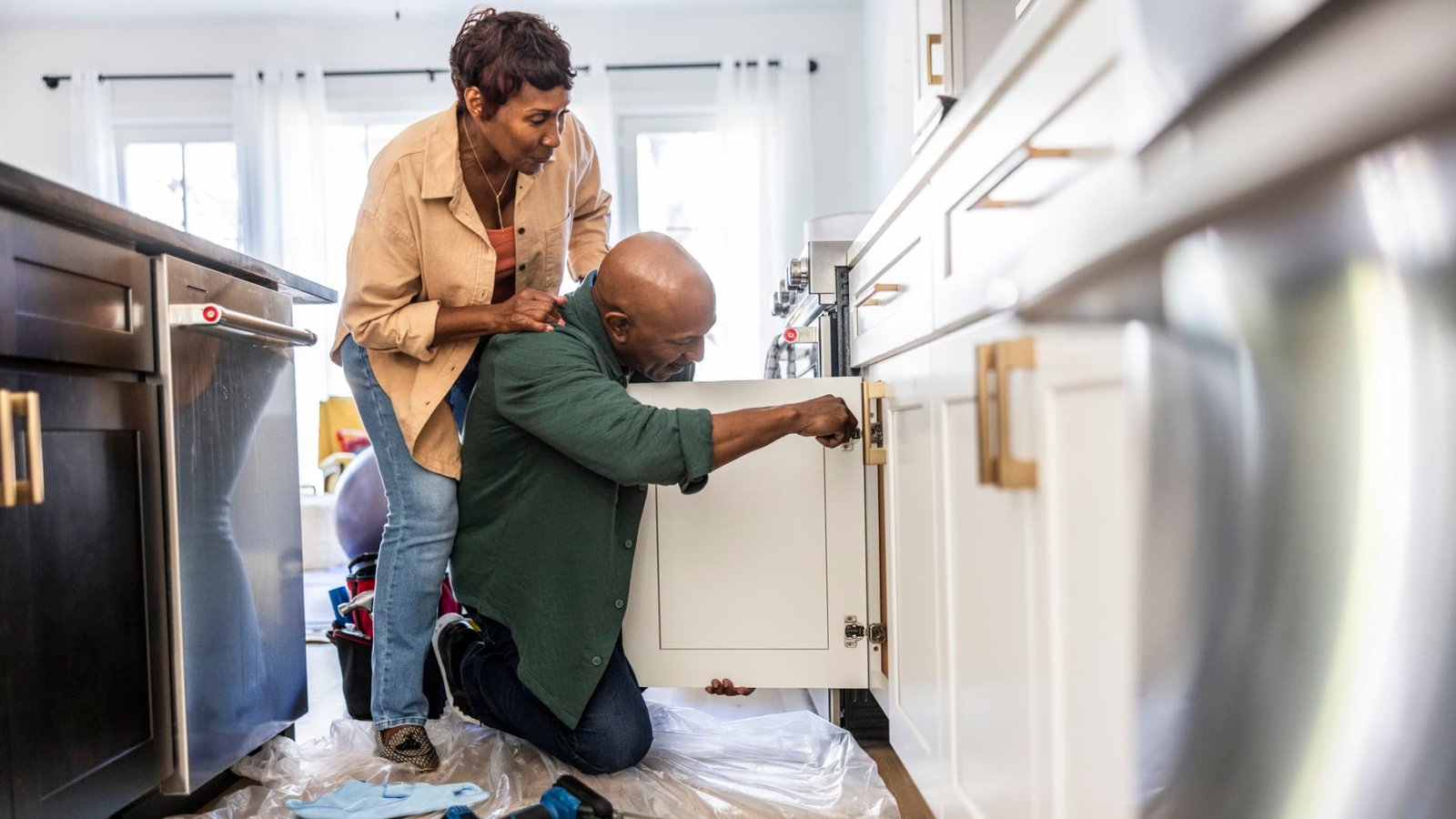
Elderly couple repairing kitchen cabinets at home
Momo Productions | Digital Vision | Getty Images
Alex Marrero and his wife bought their first home in Coral Springs, Florida, this spring, and the couple have already spent about $17,000 on maintenance, repairs, and amenities on the home.
They knew renovations were needed “from the moment we bought the house,” Marrero said, but some of the renovations ended up costing more than they anticipated.
For example, four hurricane impact-resistant windows and a garage door were estimated to cost between $4,000 and $5,000, but after getting quotes from multiple contractors, the final price paid was $9,800.
More information on personal finance:
Tax deadline for American expatriates is June 17th
Home equity is nearing record highs. It may be hard to take advantage of it
What to expect from the housing market this year
Since purchasing the home in mid-April, the couple hired a contractor to repair damaged wood floors, spending a total of $2,200, installed a pool safety fence for $1,673, removed the popcorn finish on the garage ceiling for $800, had a textured ceiling primed and painted for $650, and replaced cracked roof tiles for $1,670.
“We expect there will still be more expenses,” said Marrero, 33. “We know the pool pump is at the end of its life, so we’re prepared.”
“It’s enlightening to understand that process.”
Marrero’s experience is not unusual.
Experts say the “hidden costs” of homeownership, particularly repairs and maintenance, can come as a shock to homeowners.
Nearly one in five homeowners (19%) said the cost of a home improvement project was what surprised them most in the six months after buying a home. That’s according to a new report from Angi, an online marketplace that connects homeowners with professional contractors for home maintenance and renovation. In late May, the site surveyed 1,000 Americans who’d bought a home in the past five years.
“If you live in an apartment, you’re not going to hire a home remodeler, so I think you’re realizing how much it’s going to cost to hire a plumber,” Angie co-founder Angie Hicks said.
“It’s enlightening for them to understand the process,” she said.

The national average annual “hidden costs” of homeownership is about $18,000, according to another report from Bankrate.com, which estimates home maintenance costs at 2% of the home’s value annually.
Based on its calculations, Bankrate estimated that in states with the most expensive homes, such as California, Hawaii and Massachusetts, annual carrying costs could exceed $26,000.
Meanwhile, in Kentucky, which Bankrate cited as the state with the lowest maintenance costs, annual maintenance fees could be around $5,000.
Angie’s research found that first-time homebuyers are less likely to be aware of these costs than previous homeowners and are more likely to say they’ve spent more money than they expected on home maintenance, renovations and emergencies.
“Once you’ve owned a home for a while, you start to understand what the issues are,” Jeff Ostrowski, an analyst at Bankrate.com, recently told CNBC.
To help you avoid unexpected maintenance expenses, here are some things to consider as a home buyer or new home owner.
1. Hire a home inspector
About 19% of buyers waived home inspections in April, down from 22% a month earlier and 21% a year ago, according to the National Association of Realtors.
Hicks said home inspections are sometimes skipped because they have to be done in a short space of time, and people can “start making less than ideal choices” out of fear they might lose their home.

But Dan Borden, a home construction expert and president of Regal Eagle Contractors in Bellaire, Texas, said hiring a home inspector is essential.
“That’s probably the most important thing you can do,” he said.
Home inspectors typically require a week’s notice on average, so keep that in mind when you start looking for a home, he said.
Borden said you should ask your real estate agent to introduce you to a qualified home inspector in your area who can provide a thorough service.
“Instead of spending $450, you could spend $600 on someone better, but it’s money well spent,” he said. “You want to find as many as you can.”
2. Look for “deal breakers” in your home inspection
JGI/Tom Grill | Tetra Images | Getty Images
Hicks said home inspections are a “critical part” of the home-buying process because they can uncover elements in the home that could be “deal breakers.”
If possible, be present for the inspection.
“If you’re with them, they’ll tell you what’s urgent and what’s serious,” Borden said.
For example, if your home has lots of cracks in doorways or windows, or floors that slope downward when you walk across them, that could be a sign of a problem with your foundation, he says.
“You don’t want to buy a house that has foundation problems. They’ll get worse over time and are expensive to repair,” Borden said.
Other notable deal hurdles include termite damage and water damage, he said.
An inspection can also help you know the age of important elements like the roof. Use the inspection process to ask about these elements to determine whether you have the budget to cover their costs or if it’s worth asking the seller, Hicks explained.
Having a complete list of problems noted during the inspection could help prioritize repairs or negotiate the purchase price of the home, Bowden said.
3. Maintain a critical eye as a homeowner
Once you’re a homeowner, it’s important to keep up with regular maintenance on your home. “Don’t neglect to tune up your air conditioner or furnace,” says Hicks. “It’s like getting an oil change in your car.”
To avoid surprises, inspect the home regularly and look for any corners or corners that need repairs. Homeowners are “most critical” when they buy a home, but often lose that “critical eye” once they move in, Hicks says.
Bowden said mechanical inspections should be done at least once a year, as well as plumbing and electrical inspections.
“We need to be vigilant,” he said.
Correction: This story has been updated to correct figures and quotes from Angie Hicks.