


Denim is gaining popularity among consumers, but it has not translated into a big increase in sales. Levi Strauss.
The jeans maker reported second-quarter earnings on Wednesday that were slightly below Wall Street expectations, at a time when shoppers are stocking their wardrobes with denim dresses, skirts and ultra-low-rise baggy pants.
Levi’s reported better-than-expected profits as direct-to-consumer sales and cost cutting continued to pay off. The company raised its dividend 8% to 13 cents a share, its first increase in six quarters.
Still, shares fell about 12% in after-hours trading.
Here’s how Levi’s quarterly results compare to Wall Street expectations, based on an analyst survey by LSEG:
Adjusted earnings per share: 16 cents (expected: 11 cents)Revenue: $1.44 billion (expected: $1.45 billion)
The company reported net income for the three months ended May 26 of $18 million, or 4 cents a share, compared with a loss of $1.6 million, or 0 cents a share, in the same period last year. Excluding one-time items, Levi’s posted profit of $66 million, or 16 cents a share.
Sales rose to $1.44 billion, up about 8% from $1.34 billion in the same period last year, but the jump in sales was due to easier comparisons.
Sales in the same period last year fell 9% as Levi’s shifted its wholesale shipments from the second quarter to the first quarter. The company previously said the shift cost it sales about $100 million last year. Excluding the shift and the exit of its Levi’s Denizen business, sales in the most recent quarter would have increased only about 1% compared to the same period last year.
Financial Chief Harmit Singh said the lower-than-expected sales were due to unfavorable foreign exchange rates and weak sales of Dockers. Sales of the khaki and chinos brand rose 8.6 percent to $82.4 million in the quarter, from $75.8 million in the same period a year ago. It was unclear how Dockers sales were affected by the timing of Levi’s wholesale orders.
“People are generally cautious,” Singh said in an interview with CNBC. “It’s not necessarily a big buying environment, but people are cautious.”
Levi’s reported better-than-expected results but only reaffirmed its full-year guidance, which was in line with expectations: The company continues to expect full-year earnings per share of between $1.17 and $1.27, including a 5 cent reduction due to its new distribution and logistics strategy.
Levi’s said it is transitioning from a company-owned and operated distribution and logistics network in the United States and Europe to one that relies more on third parties.
“In the short term, these changes will require us to operate the old and new facilities in parallel for the remainder of 2024, resulting in temporarily increased delivery costs,” the company said.
The change allows Levi’s to transfer responsibility for final delivery to a third party. The denim maker noted that the new contracts with suppliers mean Levi’s will take ownership of inventory closer to the shipping point rather than the final destination. Levi’s distribution network was built for a business that primarily sold to wholesalers, but now it must change to focus on direct-to-consumer sales.
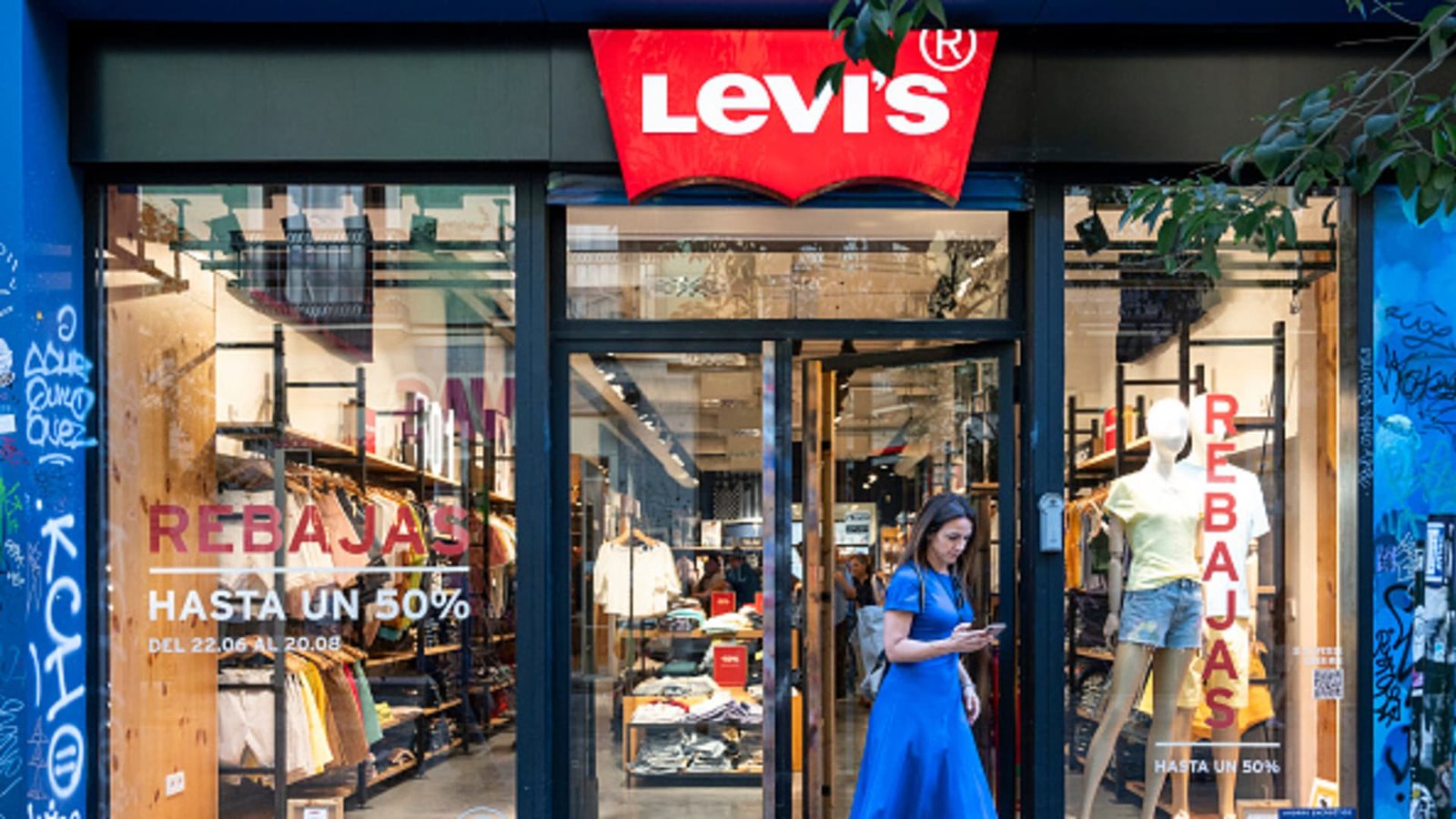
The changes are necessary because nearly half of Levi’s sales these days come from its own website and stores.
Direct-to-consumer sales increased 8% during the quarter and accounted for 47% of total sales, while online sales increased 19%.
“Our transformational shift to operate as a DTC-first company is producing positive results around the world, and we are very confident in our position to deliver accelerated, profitable growth for the remainder of the year and beyond,” CEO Michelle Gass said in a statement.
Wholesale sales increased 7% during the quarter, but excluding shifts in the timing of wholesale orders, sales in the channel were down 4%. Singh said that while wholesale sales improved sequentially, the company is “conservative” about the future growth of the channel.
By building its own direct-sales channel, Levi’s is garnering higher margins, better data on consumers and less reliance on volatile wholesalers like Macy’s Inc. and Kohl’s Inc., which are shrinking and losing favor with consumers.
However, direct sales can be expensive and there can be unforeseen issues that affect sales and reduce profits. For example, if someone buys Levi’s jeans at Macy’s and wants to return them, Macy’s would normally cover the cost. With a direct sales model, that responsibility, including costs and logistics, is left to Levi’s.
Nike has become known as a cautionary tale for retailers that have long relied on wholesalers to expand their direct sales.
For a while, Nike’s focus on direct selling boosted revenue and profits, but some critics said the shift in strategy led to a slowdown in innovation and ultimately a loss of market share.
The company recently acknowledged that it had made a mistake by turning down a number of deals with wholesale partners and said it had since “corrected” them.
Read the full earnings announcement here.