


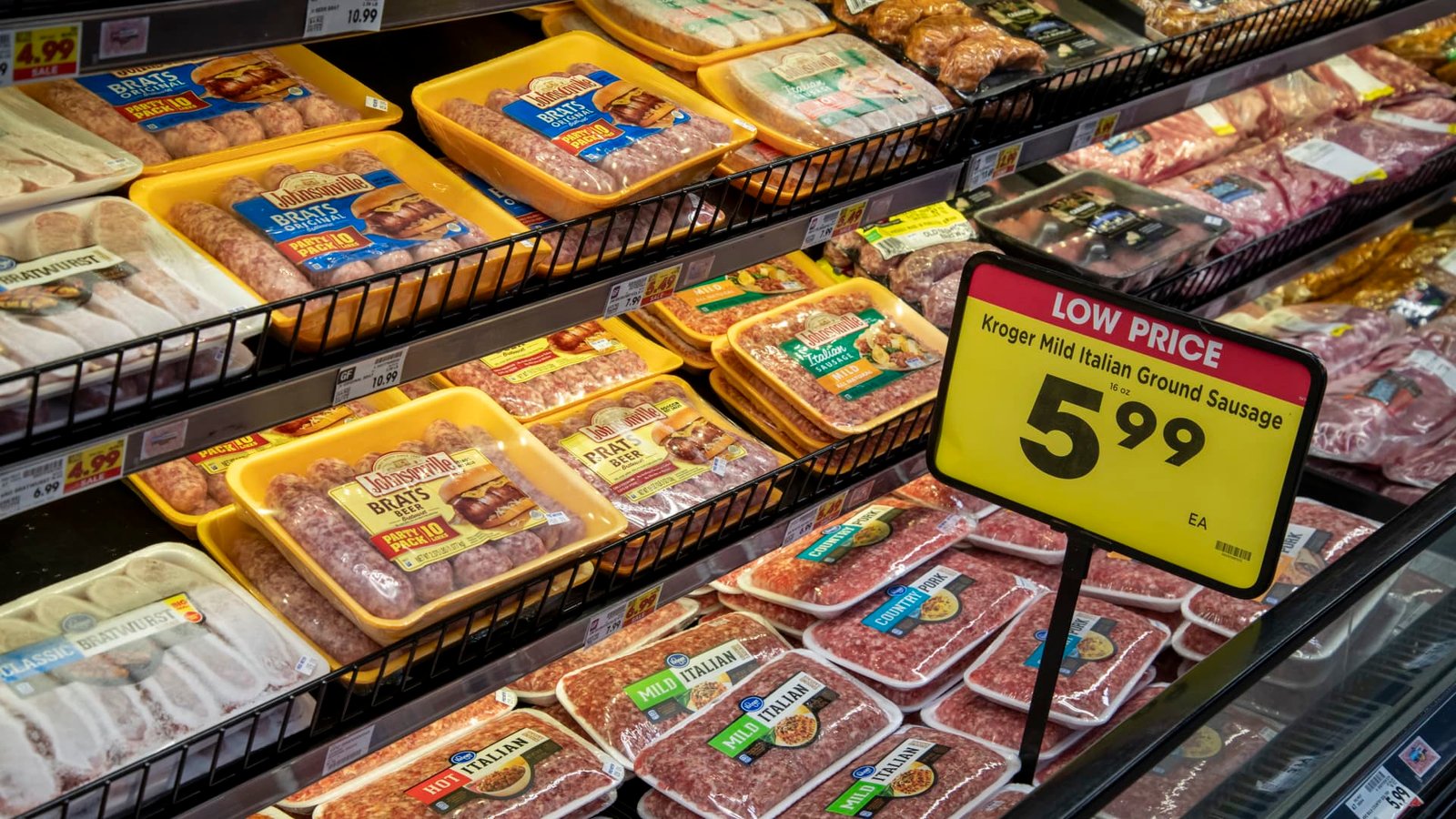
A variety of sausages are on display in the meat section of a Kroger-owned Fred Meyer grocery store in Palmer, Alaska.
Michael Silk | UCG | Universal Images Group | Getty Images
The rise in demand for sausages could mark the latest sign that consumers are struggling with high prices and trying to save money.
The Dallas Fed’s Texas Manufacturing Outlook Survey released Monday showed “moderate growth” in one manufacturer’s dinner sausage division, highlighting a trend of consumers opting for cheaper products and cutting back on spending overall as cumulative inflation squeezes purchasing power.
“The category tends to grow during weaker economic times,” respondents said, because “sausages offer a good alternative to more expensive proteins and can ‘stretch’ consumers’ food budgets,” according to edited comments included in the Dallas Fed report.
The anecdote, spotted by eagle-eyed Bespoke Investment Group on social media site X, comes as food prices remain a top concern for consumers. While annual inflation is approaching levels economic policymakers consider healthy, the overall rise in prices compared to just a few years ago has left ordinary Americans frustrated with the state of the nation’s economy.
Moreover, it reinforces two themes that are emerging as defining features of today’s post-pandemic economy.
Business executives, including those at major restaurant chains, are increasingly warning that consumers are starting to slow their spending, especially as tax rates for lower-income earners come under pressure to save money.
The shift toward sausages highlights what experts call “trading down” behavior: Casual customers might opt for typically more expensive proteins like steak or chicken, while price-conscious shoppers will seek out sausages or other cheaper alternatives.
Other food manufacturers responding to the Dallas Fed survey also expressed concern about their own economic situation, with one saying the agriculture industry as a whole is “taking a hit,” citing challenges from weather, rising costs and other factors.
Another person was more explicit: “We’re preparing for a recession.”