


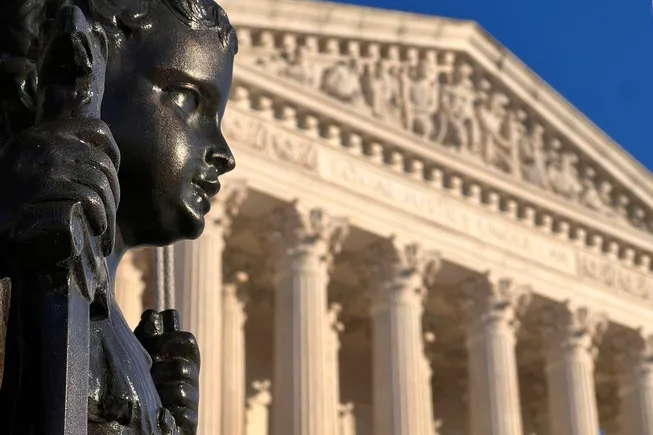
The Supreme Court on Thursday unanimously overturned an appeals court decision that had allowed Bank of America and other large banks to not pay interest on escrow funds, even though 14 states require such payments by law.
The ruling sent the matter back to the appeals court, asking it to conduct a “nuanced comparative analysis” required by federal law.
Petitioner Alex Cantero, along with petitioners Saul Himes and Ilana Harwayne Gidansky, sued their mortgage borrower, Bank of America, alleging that the bank failed to pay interest on the petitioners’ escrow account balances after the bank told the borrowers that New York’s escrow interest law took precedence over national banking law.
Initially, the district court sided with the plaintiffs. The appeals court reversed that decision and “The court held that New York law was preempted because it ‘controls’ the national banks’ authority to ‘open and fund escrow accounts,'” court documents state.
But the appeals court failed to apply the test required to determine whether state laws regulating national financial institutions preempt “in a manner consistent with” Dodd-Frank and the 1996 Supreme Court decision, Barnett Bank of Marion County v. Nelson, the Supreme Court ruled.
In Barnett Bank, the Supreme Court ruled that states could regulate national banks as long as the regulations did not interfere with the bank’s exercise of its powers.
“Courts applying that standard must make a pragmatic assessment of the nature and extent of the interference caused by state law,” the opinion written by Justice Brett Kavanaugh stated. “In this case, the Second Circuit did not conduct the kind of nuanced comparative analysis that is required,” but rather “distinctively extracted a classification test that overrides nearly all state laws regulating national banks.”
Jonathan Taylor, a principal at the law firm Gupta Wessler, which argued on behalf of the petitioners, said in an email to The Associated Press that the ruling is a victory for consumers and “vindicates Congress’ determination in Dodd-Frank to curb the aggressive preemption of state consumer financial laws that contributed to the financial crisis.”
Bank of America did not respond to a request for comment.