


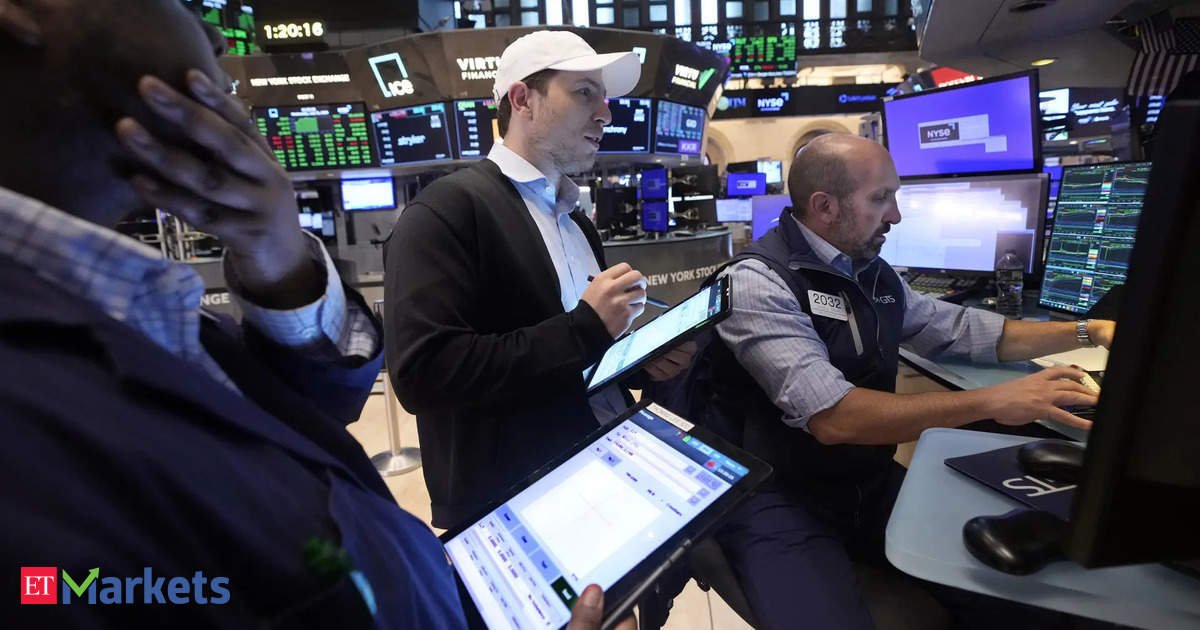
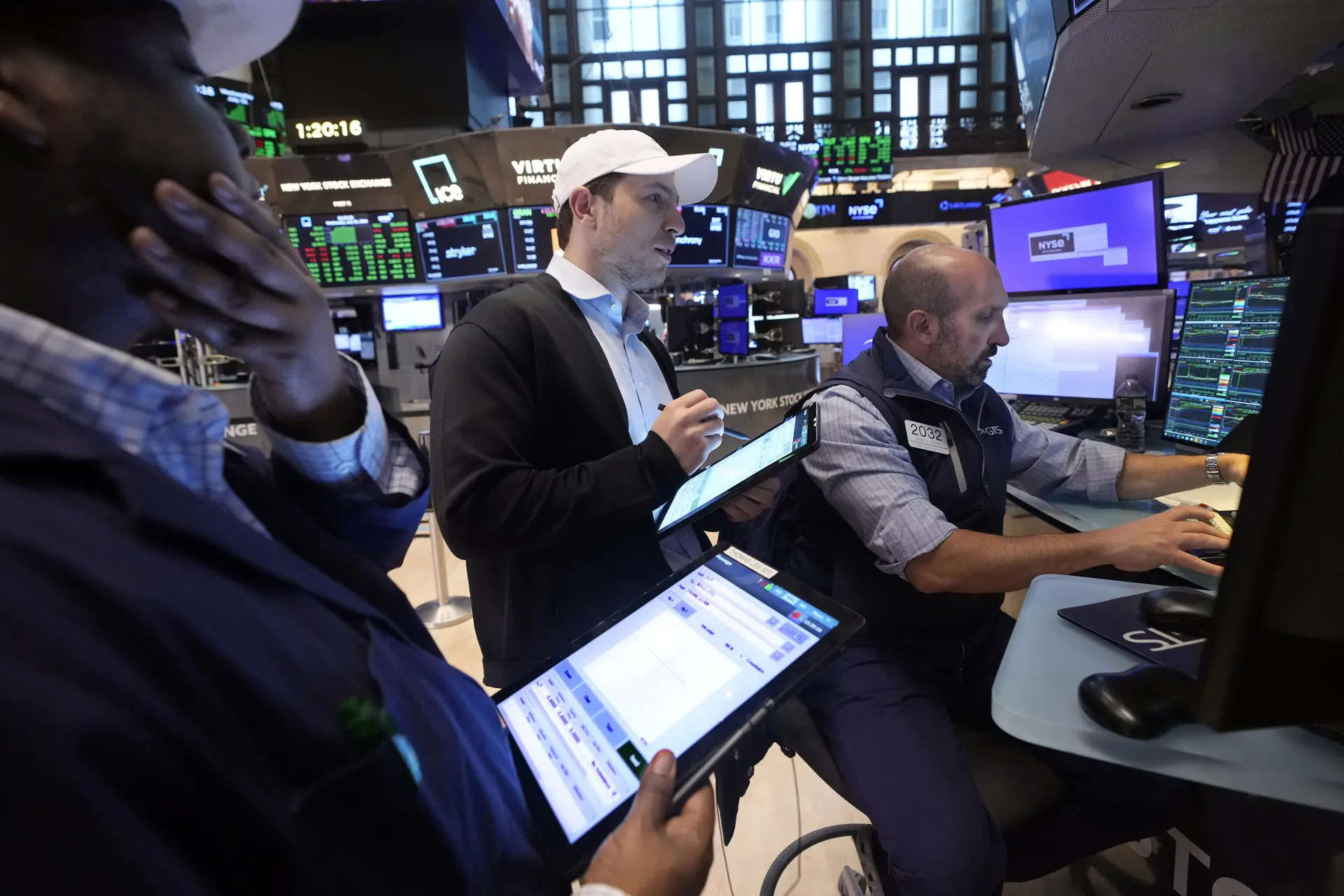
The S&P 500 was down 1.4% in midday trading after weak U.S. manufacturing data erased a morning gain of 0.8%, while the Dow Jones Industrial Average was down 1.42% and the Nasdaq Composite Index was down 2.14%.
Movement in the bond market was even more volatile, with the yield on the 10-year Treasury note falling below 4%, back to February levels.Besides the weak manufacturing data, other reports released during the morning showed that the number of U.S. workers filing for unemployment benefits rose to the highest level in a year and that U.S. worker productivity improved over the spring.
These data will likely take the pressure off inflation and give the Federal Reserve room to cut interest rates soon. Yields fell a day after Fed Chairman Jerome Powell gave his clearest hint yet that inflation may have slowed enough to start easing interest rates in September. Such a cut would boost the economy and investment prices.
But the data also raised concerns that the U.S. economy could collapse under the cumulative weight of interest rates, which the Fed has kept at 20-year highs for nearly a year. Higher interest rates make it more expensive to borrow on credit cards for everything, including homes and cars. And the full impact of the interest rate cuts could take months to a year to seep through the economy. On Wall Street, shares of companies whose profits are most closely tied to the strength of the economy fell the hardest. Energy stocks in the S&P 500, for example, fell 2%, while industrial and financial companies also fell more than the overall market. Small caps in the Russell 2000 fell 2.5%. These stocks had risen more than the overall market last month on hopes that the economy would remain strong even as interest rates fell, a powerful combination for small caps. The S&P 500 would have fallen even more if it hadn’t been for companies such as Meta Platforms, which reported better-than-expected earnings in the spring. Meta, the company that owns Facebook and Instagram, was the S&P 500’s biggest booster, rising 6.9% after reporting profits and revenue that beat analysts’ expectations.
Uncertainty had been building ahead of the report’s release as other members of a group of highly influential stocks known as the “Magnificent Seven” disappointed investors. This handful of big tech stocks had powered the S&P 500 to dozens of records this year, fueled in part by enthusiasm around artificial intelligence technology, but that momentum reversed last month amid worries that investors may have priced stocks too high and gotten their hopes up too high.
Some of the concern centers on how much companies are investing in AI and how quickly they will see benefits from it. Meta Platforms said late Wednesday that it expects spending and investment in AI research and product development to increase “significantly” next year.
While analysts have said the spending will hurt earnings, Meta Platforms stressed that it is already seeing some benefits, such as the widespread adoption of its AI glasses.
Other technology companies were less well received by investors. British semiconductor giant ARM Holdings, for example, posted better-than-expected profits and sales in the most recent quarter. But its U.S.-listed shares fell 15.1%. The company did not raise its revenue or profit forecasts for the current fiscal year, despite strong numbers at the start of the year.
Amazon and Apple, which are also part of the Magnificent Seven like Meta Platforms, are scheduled to report their latest results after the close of trading on Wednesday. Apple was down 0.8%, while Amazon was up 0.1%.
In the bond market, the yield on the 10-year Treasury note fell to 3.98% from 4.04% at Wednesday’s close and from 4.70% in April.
Traders are all but certain that the Federal Reserve will cut its key interest rate in September. The only question for them is how many times the Fed will cut rates this year and next.
Across the Atlantic, the Bank of England cut interest rates for the first time since the COVID-19 pandemic began in early 2020. Overall U.K. inflation has already reached the bank’s 2% target, and the U.S. central bank is still aiming for that target.
London’s FTSE 100 index fell 1 percent, erasing the previous day’s gains, and stock indexes in many European and Asian countries also fell.
Japan’s Nikkei stock average fell 2.5%. A day earlier, the Bank of Japan raised interest rates, helping to boost the value of the yen against the U.S. dollar. Such fluctuations could weigh on profits for exporters, with Toyota shares falling 8.5% in Tokyo on Thursday despite reporting an increase in profits.
AP Business Writers Yuri Kageyama and Matt Ott contributed.