


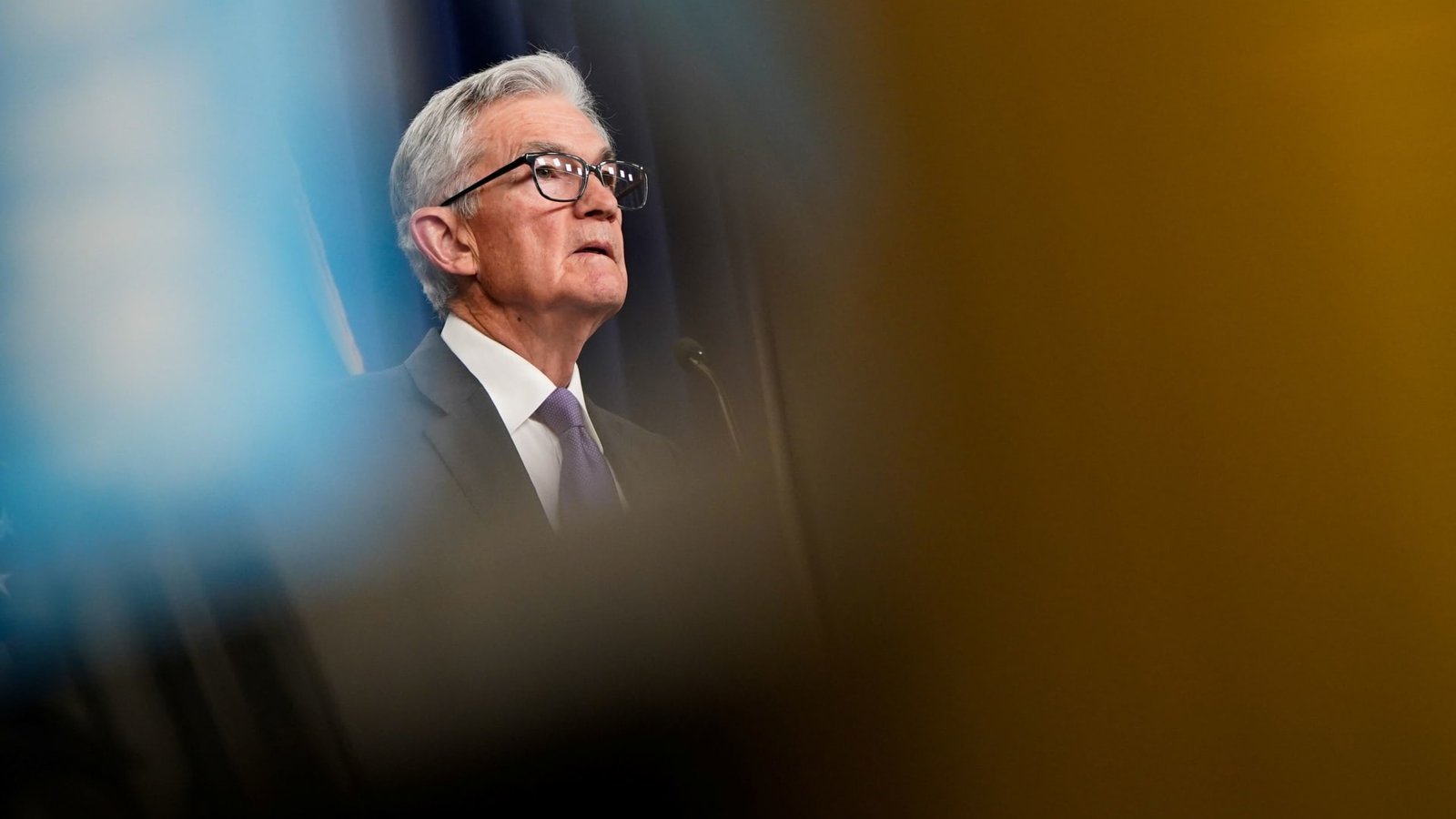
US Federal Reserve Chairman Jerome Powell speaks at a conference celebrating the 100th anniversary of the Federal Reserve’s Department of Research and Statistics, in Washington, DC, USA, November 8, 2023. (Photo by Celal Gunes/Anadolu via Getty Images)
Celal Gunes | Anadolu | Getty Images
Wednesday is shaping up to be one of the most important days of the year for economic news, as investors will find out the trajectory of inflation and how the Federal Reserve plans to respond.
The combination of events — starting with the release of the all-important May Consumer Price Index in the morning and ending with the Fed’s policy meeting in the afternoon — will send important signals about the direction of the economy and whether policymakers will be able to take their foot off the brakes anytime soon.
“Months’ worth of macro risk was packed into one day,” UBS economist Jonathan Pingle wrote.
Like many on Wall Street, Pingle expects the CPI report, combined with last Friday’s unexpectedly strong nonfarm payrolls number and other recently released data, will prompt Fed officials to revise their outlook for inflation, economic growth and interest rates.
Optimists hope that these moves are broadly within expectations and will not unnerve market participants too much.
“While both have proven to be market-moving events, we expect neither announcement to be too spectacular as we expect a relatively muted outcome,” said Jack Janasiewicz, chief portfolio strategist at Natixis Investment Managers.
Roughly speaking, the expected outcomes for both events are:
CPI Inflation
A measure of how much a wide range of goods and services cost consumers in May is expected to be little changed from the previous month, up just 0.1% from April, but still equate to a 3.4% increase in the annual total.
The so-called core PCI, which excludes food and energy prices, is forecast to show a 0.3% monthly increase and a 3.5% annual increase.
None of those numbers are dramatically different from April’s figures, and they still show inflation well above the Fed’s 2% target. Still, some economists say a closer look at a range of key measures, such as insurance premiums and core services excluding housing, would suggest inflation is at least gradually moving in the right direction.
“On the inflation front, we expect the picture to remain similar, with the broader deflationary trend remaining intact and evidence continuing that the volatility in the first quarter data was simply a pause in the downward trend,” Janasiewicz said.
One important thing about the CPI: Though it gets a lot of attention from both investors and the general public, it’s not the primary metric used by the Fed. The central bank prefers the Commerce Department’s measure of personal consumption expenditures prices, a broader measure that also takes into account changes in consumer behavior.
The Bureau of Labor Statistics is scheduled to release the CPI report at 8:30 a.m. ET on Wednesday.
Federal Reserve Board Meeting
While the BLS releases its CPI report, members of the Federal Open Market Committee, which is responsible for setting interest rates, are scheduled to finalize their forecasts for inflation, gross domestic product, and unemployment, as well as outline their expected interest rate path beyond 2026.
First, when it comes to interest rates, the Fed will likely do nothing: Market pricing and policymaker comments indicate there is little chance of rates moving either way, and the central bank is keeping its benchmark overnight borrowing rate in the 5.25% to 5.50% range.
Instead, authorities will likely take other steps that markets will be closely watching.
FOMC members are due to release a summary of their economic outlook each quarter, which could be influenced by the CPI report. Meeting participants typically submit their forecasts early on Wednesday, but the 19 meeting participants are typically given a little extra time to consider the incoming data.
The informal consensus in market commentary is that the Fed will revise upwards the trajectory of its key “dot plot.” That would mean fewer rate cuts than the three the grid suggested for 2024 in March, moving it towards a trajectory where most economists expect two rate cuts, though some worry the outlook could be scaled back to one.
UBS’s Pingle said if the Fed does hint at one rate cut, it likely won’t act until November or December.
Goldman Sachs economists are expecting two rate cuts, with the first coming in September, but others see the dot plot pointing to two, with Bank of America predicting one cut and Citigroup predicting three possible cuts.
“We continue to view a rate cut as an option, and headlines on inflation suggest a rational but not obvious decision to cut rates, with varying views among FOMC participants limiting our confidence,” Goldman economist David Mericle wrote.
Economists also expect the Fed to lower its gross domestic product growth forecast and raise its expected inflation rate from its March estimate.
Other notable actions from the Federal Reserve include its post-meeting statement and Chairman Jerome Powell’s post-meeting press conference.
“We don’t expect any major changes to the FOMC statement or Chairman Powell’s message at the June meeting. The most talked-about theme of Chairman Powell’s final press conference in May was his pushback against the possibility of a rate hike, but talk of rate hikes has died down in the market since then,” Mericle said.
Indeed, only a few Fed officials publicly mentioned the possibility of further rate hikes.
But the market has had to significantly reassess expectations from the start of 2024, when traders were expecting six rate cuts this year.
Recent economic data, likely to be reflected in Wednesday’s Consumer Price Index (CPI) report, point to economic developments that are causing longer-term increases in interest rates to be treated as a greater possibility. Friday’s employment report, for example, showed wages growing at an annualized rate of 4.1%, well above the rate the Fed would prefer.
“The still-growing U.S. economy is keeping wage growth stubbornly above the Fed’s unofficial 3.3% target,” wrote Nicholas Colas, co-founder of DataTrek Research. “Unless economic growth slows, it’s hard to see a path forward for more than a symbolic Fed rate cut in 2024.”