


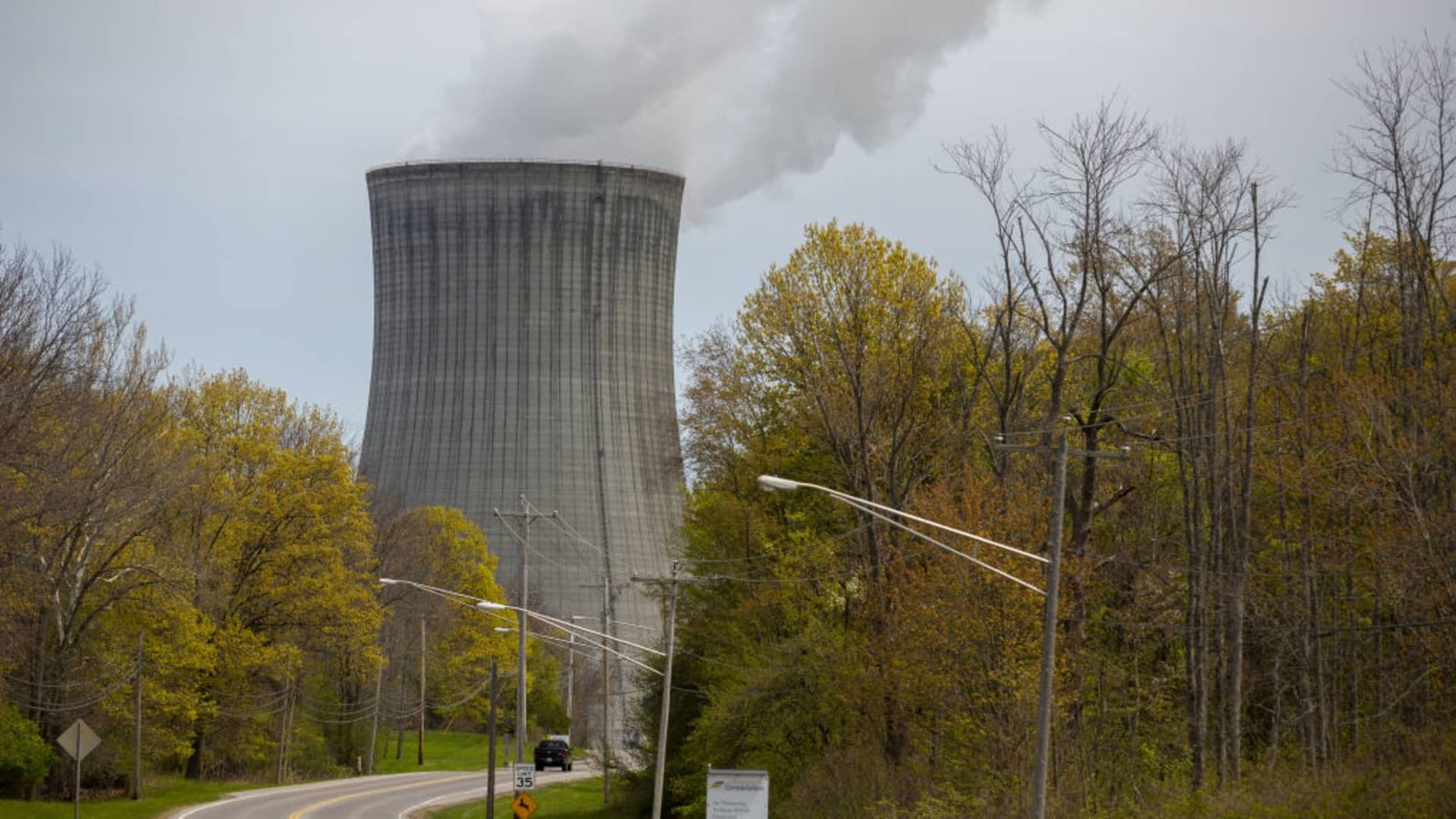
A cooling tower at the Constellation Nine Mile Point Nuclear Power Plant, Tuesday, May 9, 2023, in Scriba, New York, USA.
Lauren Petracca | Bloomberg | Getty Images
As technology companies race to secure clean energy to power artificial intelligence, they are increasingly considering connecting their data centers directly to nuclear power plants, but are meeting resistance from some utilities over the potential impact on the power grid.
Data centers, the computer warehouses that run the internet, can require more than 1 gigawatt of power, roughly the capacity of an average U.S. nuclear reactor.
Data centers are essential to economic competitiveness and national security as the United States competes with China and other adversaries in the AI race, said CEO Joe Dominguez. Constellation EnergyIt operates the largest nuclear fleet in the United States.
“Big [demand] “If you have a load where you also want to use zero-emissions energy, that puts you very close to a nuclear power plant,” Dominguez said during Constellation’s second-quarter earnings call on Tuesday. Baltimore-based Constellation operates 21 of the U.S.’s 93 nuclear reactors.
Constellation shares have risen 62% this year, making it the sixth-best performing stock in the S&P 500, as investors place a premium on the company’s nuclear power capacity to power the growth of data centers. Vistra CorporationThe suburban Dallas-based company, which owns six nuclear reactors, has seen its shares double this year, making it the second-best performing stock in the S&P 500 index after AI chip makers. NVIDIA.
Tech companies are building data centers at a time when electricity supplies are becoming increasingly tight as coal-fired power plants are phased out and demand is rising as domestic manufacturing expands and vehicles become more electrified.
PJM Interconnection, the largest electricity grid operator in the U.S., warned in late July that electricity supplies were tightening because the construction of new plants was not keeping up with demand. PJM serves 13 states, mostly in the Mid-Atlantic region, including the world’s largest data center hub in Northern Virginia.
Constellation’s Dominguez argued that connecting data centers directly to nuclear power plants, known in the industry as colocation, is the quickest and most cost-effective way to help build data centers without burdening consumers with the expense of building new power lines.
“The idea that we could store enough electricity on the grid somewhere to power a gigawatt of data center is, frankly, absurd to me, that we could do that anywhere in the space of a few decades,” Dominguez said. “That’s a huge amount of power to try and focus on.”
Amazon Nuclear Agreement
But locating a data center next to a nuclear power plant has already sparked controversy.
March, Amazon The web service will operate a data center at the 41-year-old Susquehanna Nuclear Power Plant in Pennsylvania. Talen Energy A $650 million deal to sell electricity from nuclear power plants directly to AWS data centers has already faced opposition from utilities. American Electric Power and ExelonIt filed a complaint with the Federal Energy Regulatory Commission (FERC).
AEP and Exelon argue that the Amazon-Talen deal sets a precedent that will reduce available power in the PJM grid area because resources will “flee to loads that use and benefit from the transmission system but do not pay its costs.”
“This will harm our existing customers,” the utilities told FERC in a June filing. Talen Energy has dismissed the objections as “plainly false” and accused the utilities of stifling innovation.
“The rapid emergence of artificial intelligence and data centers is fundamentally changing electricity demand and creating an inflection point for the electricity industry,” Talen said in a June statement. “The co-location agreement between Talen and AWS brings customers a single solution to this new demand on a timeline they can rapidly respond to.”
FERC has requested more information about the services contract between Talen and AWS. The regulator plans to meet in the fall to discuss issues related to connecting large electric loads directly to power plants.
“It’s a really great opportunity for stakeholders and commissioners to interact in an informal setting like a conference, rather than in litigation,” Constellation Chief Strategy Officer Kathleen Baron said on the company’s recent earnings call, referring to the fall FERC meeting.
Purchase of nuclear power
Constellation and Vistra backed the AWS-Talen agreement in FERC filings, and their CEOs said on earnings calls this week that colocation and traditional grid connections will be needed to meet demand.
Baron told CNBC that Constellation has received interest from “a number” of technology companies about co-locating a data center at one of its facilities.
Vistra has been in multiple discussions with customers about colocation and is “doing due diligence on several sites,” CEO Jim Burke said Thursday. The fight in the PJM region over colocation may lead data center developers to look more closely at Texas, which runs its own grid called ERCOT, Burke said.
“We’re seeing interest in Comanche Peak,” Burke told analysts on the company’s second-quarter earnings call, referring to one of Vistra’s nuclear plants. Comanche Peak, about 50 miles from Fort Worth, Texas, has two reactors with a capacity of 2.4 gigawatts, enough to power 1.2 million homes under normal conditions and 480,000 homes at peak times, Vistra said.
and Dominion Energy The company has signaled its openness to connecting a data center to the Millstone Nuclear Power Plant in Connecticut. Dominion’s service area includes Northern Virginia, the epicenter of the data center boom.
“We continue to evaluate our options,” Dominion CEO Robert Blue said on a second-quarter earnings conference call. “It’s clear that any co-location options would need to be something that makes sense for us, our potential clients and our stakeholders in the state of Connecticut.”
The U.S. needs to start thinking more about balancing the power needs of data centers with those of all consumers, said Kelly Trice, president of Holtec International, a privately held Florida-based nuclear company that is working to restart the Palisades nuclear plant in Michigan and is also talking to tech companies about nuclear energy.
“Basically, if we’re not careful, the hyperscalers and the data centers could monopolize all the power and consumers wouldn’t get any of it,” Trice told CNBC. “So it’s a balance of what consumers are actually entitled to.”
“The U.S. hasn’t started wrestling yet. [with] “We’re not there yet,” Tollis said, “but I think we’re getting closer.”